Weight-Loss Peptides
Retatrutide, Cagrilintide, AOD-9604, 5-Amino-1MQ — the GLP-1 and metabolic compounds at the center of modern weight-loss research, prefilled and dose-accurate.
About weight-loss peptides research peptides
This category covers incretin-axis and metabolic-pathway compounds most commonly studied in energy-balance, glycemic-control, and adipose-signaling research. All are peptide or peptide-analog agonists acting on well-characterized receptors.
All GLP-1-class compounds in this category are stable refrigerated (2–8 °C) in pen format. Most retain in-use stability for 28 days after first dose — per-SKU storage notes on each product page.
- Semaglutide
- GLP-1 mono-agonist. The most-studied compound in the class; longest-running clinical dataset.
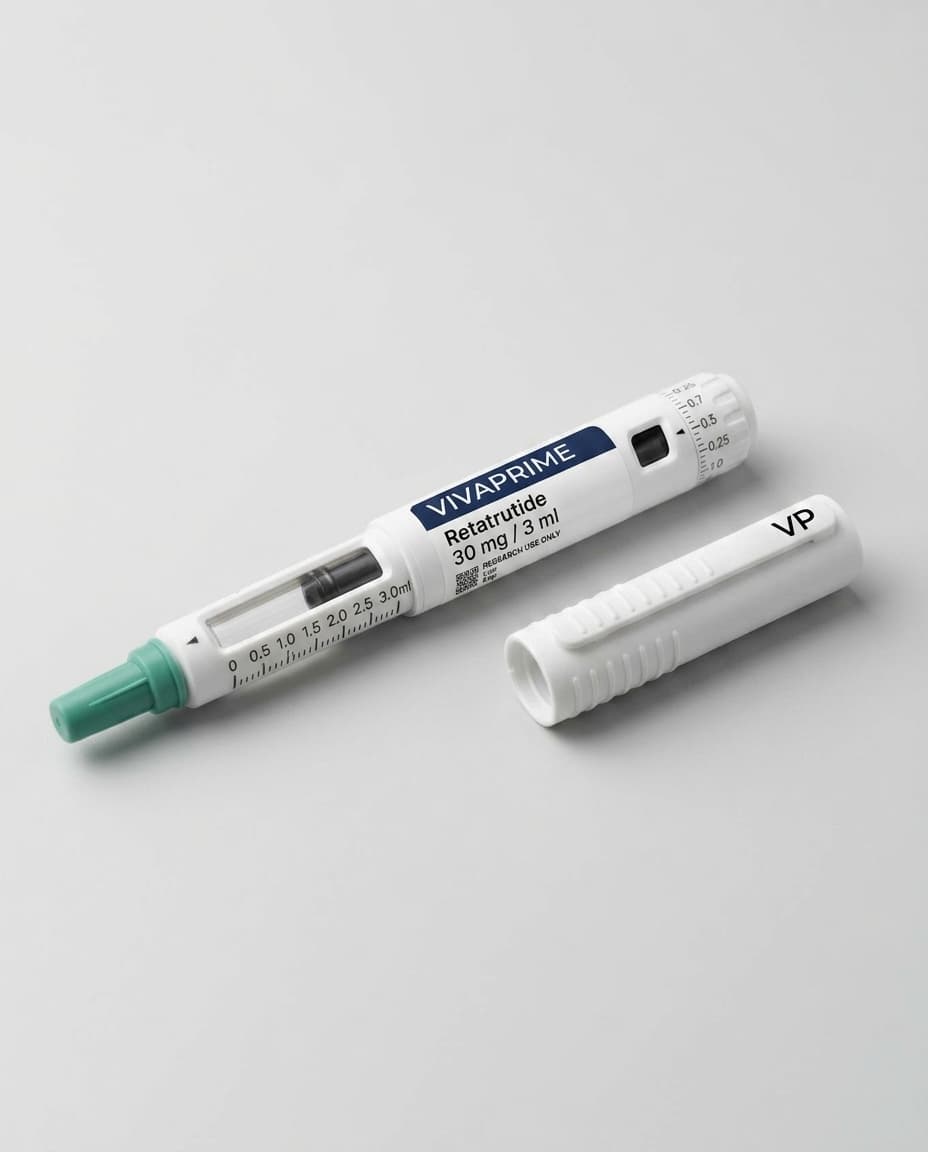
- Retatrutide
- Triple agonist (GLP-1 + GIP + glucagon). Adds glucagon-receptor activity to further increase energy expenditure in preclinical models.
- Cagrilintide
- Long-acting amylin analog most notably co-studied with Semaglutide (the 'CagriSema' stack). Acts on amylin-receptor complexes — a different pathway from GLP-1/GIP, with additive effects on satiety signaling in published research.
- AOD-9604
- Non-incretin comparator. GH-fragment (hGH 176–191) studied for lipolytic effects — a distinct class from the GLP-1-axis agonists above.
- 5-Amino-1MQ
- Small-molecule NNMT inhibitor studied in fat-cell metabolism and NAD-salvage research — a non-incretin complement to the GLP-1-axis compounds.
All compounds listed above are sold for in-vitro research by qualified researchers. No therapeutic, diagnostic, or consumption claim is made or implied. References to mechanisms, pathways, and studies reflect published research and are not claims about efficacy, safety, or intended use.